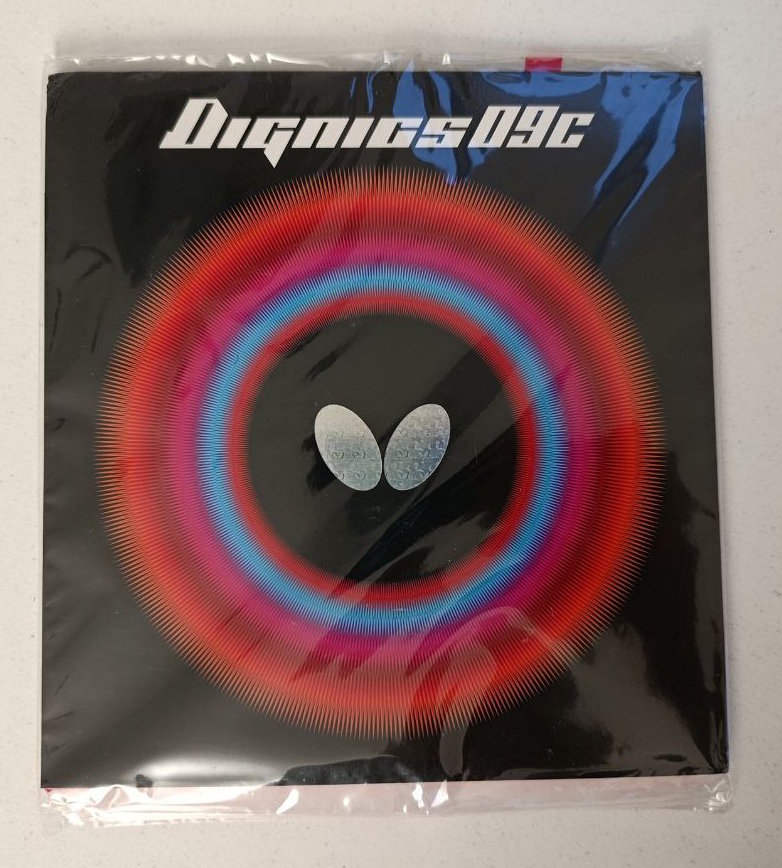
In the varied ecosystem of modern table tennis, the long-pimples has secured a unique niche. What once might have been seen purely as a defensive or disruption tool has evolved into a viable attacking weapon in its own right. For a player using long pimples in an offensive or mixed role, mastering the specific tactics that exploit their unusual characteristics is a key pathway to competitive advantage.

1. Introduction
Long-pimple (LP) rubbers have distinct features compared with standard inverted (smooth) or short-pimple rubbers: they often provide high “spin reversal” or unpredictable bounce, can deaden or slow down incoming spin, and create subtle tempo or depth changes.
For players adopting long pimples offensively, understanding how to harness these features — and build effective tactics around them — is critical.
This article will take you through:
- Key technical points for attacking with long pimples
- Defensive and variation tactics specific to LP
- Combination styles (both for shake-hand and pen-hold grips)
- Universal tactics: serve/receive, positioning, rally control
- How to build a coherent long-pimple strategy in match play
Let’s begin.
2. Technical Focus for Long-Pimples Offence
When you use long pimples with the intent to attack (not just defend), your technical choices must adapt to what the rubber does best and mitigate its limitations.
2.1 Understanding the difference vs. regular inverted rubbers
With an inverted rubber (smooth), you expect to impart spin, use the surface to “grab” the ball, lift, accelerate, loop, etc. With long pimples, the interaction with the ball is different: the longer pips typically reduce adherence of the ball, reduce the effect of incoming spin (or even reverse it), prolong dwell time slightly (the ball sits a bit), and often produce flatter contact. Because of this, attacking with LP cannot simply mimic the same motion and timing as for inverted rubber.
For example: when using LP in an attacking shot, you often must strike the ball thinner (i.e., make shallower contact) and add more upward (lift) component to compensate for the lower “grip” of the rubber. If you simply swing the same way you would with inverted foam, the risk is that you’ll hit the net or send the ball long because the rubber didn’t “bit” the ball as much.
2.2 Key attacking stroke elements
Below are essential points to keep in mind:
- Thin contact and upward component: Since the long pips do not hold the ball in the same way, you typically brush the ball, contact it a little later in its bounce, and add an upward component — especially when attacking a heavy back‐spin ball.
- Avoid “smashing full force” on every opportunity: Unless you have a clearly favourable ball, the attacking motion with LP often benefits from a controlled tempo rather than full throttle. Because LP produce more unpredictable trajectory, maintaining accuracy is vital.
- Use the “brush / flick / flip” style over heavy loop: Rather than large looping swings, many LP attacks are shorter, more compact, often using knock-ons, flicks, a quick “lift and push/drive” rather than full loop.
- Strike mid‐to‐lower part of the ball when converting from spin (especially back-spin): If the opponent plays back-spin, and you want to attack with your LP, you can contact the ball mid-to-lower surface, use a “lift and pull” motion (as opposed to purely forward) – this enhances the effectiveness of LP when attacking spin.
- Use the bounce and dwell time to your advantage: Since LP have slightly longer dwell, you can afford to place more intention on placement, disguise, depth, and variation (rather than only power).
- Be selective: choose your attack window: Not every ball is right for LP attack. You need to pick moments where the ball’s quality, trajectory or spin suits your LP attacking style.
2.3 Example stroke sequence
Imagine you are facing an opponent’s back‐spin push. With your LP on the forehand (for example): you receive the push, then the opponent returns again with a moderate ball. You swing with your LP: you take slightly later, brush upward and forward, aiming to generate enough lift so that the ball dips and the opponent misreads or mistimes it. Because the LP will often produce a “dead” or low arc, combined with downward momentum, the opponent may net or block high. This is the kind of attacking conversion possible with LP.
3. Defence, Variation and Rhythm Control with Long Pimples
One of the greatest strengths of long pimples is how they allow you to disrupt the rhythm, variation, spin and depth of rallies. To use LP effectively, defence and variation must become part of your tactical toolkit.
3.1 Blocking and chopping with LP
LP are particularly effective at blocking because their long pips often reverse or neutralise spin. Many players using LP for defence utilise the blocking style: when the opponent loops with heavy topspin, your LP block will often produce a ball with lower (or even opposite) spin, sometimes with a “dead” trajectory, sometimes sinking sharply. This forces errors from the opponent. On push or chop exchanges, your LP push/chop will often create surprise spin or curve.
From a variation standpoint:
- A shorter block or touch‐block (soft, with minimal movement) can force the opponent to generate their own momentum.
- A chop or longer defensive stroke, especially from mid/away table, can add more variation.
- Mixing tempo: one stroke slow with heavy underspin, next stroke soft, next stroke a quick “put‐away” or flick.
3.2 Tempo, depth and variation
One major advantage of LP is the ability to vary tempo and depth unexpectedly. Examples:
- Use a short dead shot (just tap the ball, minimal spin) to change rhythm.
- Use a deep, heavy ball with LP, especially when the opponent is mid-to-far table, causing the return to be off.
- Use a short but low spin shot just over the net, forcing the opponent to reach and mis‐time.
- Change placement: switch from deep to short, wide to centre, left-to-right. This placement change combined with spin/tempo variation causes uncertainty for the opponent.
3.3 “Take up first attack” with LP
One of the key tactical features: when using LP you often want to be the first on the offensive — even when you are playing a “defensive/variation” style. Because your shots may produce weird spin or bounce, getting first contact (taking control) means your opponent has less time to settle. For that reason:
- At the start of the rally or after serve, try to take the initiative with LP rather than purely defend.
- Use the LP to force a weak return (via variation) and then convert to an attack (either with LP or switch to inverted rubber if you have it).
- The unpredictability of LP often pays off if you attack earlier.
3.4 Psychological / tactical disruption
Beyond the pure shot mechanics, LP bring psychological/tactical disruption: your opponent often cannot easily read the spin or trajectory, misjudges depth, or becomes cautious. Tactical suggestions:
- Use “odd” placement or spin so the opponent cannot settle into a rhythm.
- Force them to play longer rallies where variation favors you rather than them dominating loops.
- Use LP to change roles: you defend, then suddenly counter-attack. This keeps opponents off–balance.
4. Combination Styles & Tactical Application
Using long pimples successfully often means combining them with inverted rubber on another side (or using mixed styles) and adapting depending on grip style. Here are some common combinations and how tactics differ.
4.1 Shake-hand grip: inverted on forehand, LP on backhand
This is a very common deployment. Typically, the backhand uses LP to control/break rhythm, while the forehand uses inverted rubber to attack.
Tactical implications:
- Use your backhand LP primarily to disrupt and create opportunities for your forehand attack. You might use LP blocks, pushes, quick flicks, side pushes, wide or middle placement to make the opponent mis‐return.
- When the ball goes to your forehand side, you switch into your inverted attack mode. Because the opponent has been disrupted by LP on your backhand side, they may be under pressure, making forehand easier.
- It’s critical to choose the right ball before switching roles: you may stay on LP for a rally until you see a good attacking opportunity, then transfer to forehand.
- Footwork and positioning are key — moving from the backhand to the forehand quickly, maintaining balance, timing the switch.
4.2 Pen-hold grip: LP and inverted combinations
With pen-hold players there are multiple combinations: e.g., forehand inverted, backhand LP (with reverse/backhand stroke), or forehand LP, backhand inverted, or even LP on both sides. Below are some tactical notes:
- Forehand LP / backhand inverted: you take the initiative on forehand side with LP (both defence and attack) and when the opponent is under pressure you switch to backhand inverted for finishing attacks. The key is mixing LP touches on forehand — blocks, flicks, fast drives — with sudden inverted attacks.
- Backhand LP / forehand inverted: you use your backhand LP to control or redirect opponent’s forehand loops; then when you get the ball on your forehand you switch to inverted to finish. In this style, your backhand LP becomes the “safety net” or disruptor; the forehand is your scoring arm.
- LP both sides / varied inverted shots: more advanced, but the principle remains: disrupt and vary with LP, and opportunistically attack with inverted.
4.3 When to attack vs when to disrupt
Regardless of your combination, you must always ask: Is this rally in disruption mode (variation, tempo, spin changes) or attack mode (finishing, first attack)? With LP you often begin with disruption, create weak balls, then decide to strike. Key tactical triggers might be: a short return from opponent, a weak push, a mid-table ball, or a mis-placed shot. At that moment you can convert.
For example: you receive a serve short and the opponent tentatively pushes. You push with LP, opponent returns weakly to your forehand inverted, you step around and finish with a forehand loop. Or you use LP to block and side‐push until you create a wide return, then flick into open corner. The combination and reading of rally flow is critical.
5. Universal Tactics: Serve/Receive, Positioning, and Rally Control
Beyond what side you use LP or inverted, there are foundational tactics that apply in any long-pimple strategy.
5.1 Serve and receive
- When using LP (especially on his receiving side) you can serve to the opponent in ways that maximise the LP’s disruptive potential: short serve, then follow with a long deep ball, alternate spin and placement, mix speeds and sides.
- When receiving as the LP user, consider using LP to return deep, strong pushes / loops of the opponent, turning the ball back with heavy underspin or side-variation, to force the third ball into your favour.
- The opponent may serve heavy spin to you and expect you to pop it up; with LP you have the chance to return it dead or with twist, or neutralise their spin and draw weak returns.
5.2 Positioning and table distance
LP players often benefit from closer-to-the-table positioning, especially when using blocks/pushes or flicks, because mid/long-table attacks may reduce the accuracy of their disruptive returns. In other words: stay near the table because long pimples cannot generate spin on their own as easily at mid or far table, and the accuracy declines.
- Near the table: you can flick, block, push, mix tempo
- If forced to mid/far table: you must be prepared for more open rallies, use more proactive attacking with your inverted side or step around.
- Maintain good footwork: when you disrupt with LP, you must be ready to convert with your inverted side or finish when the opportunity arrives.
5.3 Rally control: switching between disruption and attack
Good LP strategy involves control of the rally: you may primarily disrupt until the opponent gives you a chance. Use LP to:
- Force the opponent into weak returns via variation (spin, depth, tempo)
- Use placement to open the table (wide angles, middle, deep vs short)
- Monitor rally flow: if you see a weak ball, convert to attack (either with LP or invert)
- If the opponent starts dominating loops or rhythm, utilise LP to break rhythm again (change depth, variation, tempo)
Switching between disruption and attack is the hallmark of advanced LP tactics.
6. Scenario-Based Tactical Examples
Here are a few concrete scenarios and how a long-pimples player might tactically proceed.
Scenario A: Opponent pushes after your serve
You serve short, opponent pushes. You push with your LP, opponent returns to your backhand (LP side) but weakly. Now you have options:
- Use LP to flick to the wide forehand corner of opponent, forcing a weak reply, then step around and finish with your forehand inverted.
- Or you stay on LP and push/place deep to his forehand, forcing him out wide, then next ball you attack with LP flick to open corner.
Scenario B: Opponent loops from mid‐table heavy topspin
You are using your LP on your backhand side. The opponent loops heavy. Your choice:
- Block with LP, aiming for dead/spin‐reversed block that lands deep and disrupts opponent’s timing.
- Use a short, soft push or side‐push with LP to change depth and opponent’s rhythm.
Once you identify a weaker return (say the opponent under‐hooks or half‐loops), convert: either step around and forehand loop with inverted or launch a drive with LP.
Scenario C: You are on the defence but see an opening
Opponent is dominating loops and you have been using LP defence. You spot a ball mid‐table and slightly short. You push/side‐spin with LP, opponent nets the return. Or you use your LP to flick and surprise him.
In both cases: you have turned defence into attack leveraging the LP’s unpredictability.
Scenario D: Mixed rubber combination – you have inverted forehand, LP backhand
In this combination, you might:
- Use your LP backhand primarily for serve/receive and first two balls to create disruption (blocks, side pushes, fast carries).
- After you catch a weak ball, you switch to your forehand inverted and finish with a strong loop/drive.
- Or if the rally continues on your backhand side and you see a topping loop return, you may hit a strong LP flick/drive directly.
So your match plan may look like: Disrupt (LP) → Opportunity → Attack (Invert) → If no chance, back to disrupt (LP).
7. Advanced Considerations & Tactical Pitfalls
7.1 Reading spin and dealing with the unpredictable
One of the things that makes LP styles effective is the unpredictable spin or motion of the ball after contact. One forum discussion emphasised that players must learn to watch the ball and listen to the racket contact rather than rely simply on opponent’s stroke type.
As a long-pimples attacker/disrupter, the unpredictability is your friend — but you must also be ready for it yourself: you may use LP on one side, but then switch to inverted on the other and face your own spin-reading challenges.
7.2 Avoid relying on brute power
A common mistake is to treat LP attacks as “just smash harder.” Because LP do not grip the ball as much, aggressive looping or smashing may reduce accuracy and increase errors. The focus should often be on placement, disruption, timing and surprise rather than raw power.
7.3 Footwork and balance are vital
Whether you are disrupting or attacking, your footwork must allow quick switching between LP side and inverted side (if you use both). Also, close-to-table play demands good reaction and movement. A weak footwork basis undermines the strategy.
7.4 When to avoid LP-only play
If you are forced far from the table, or the opponent is consistently dominating the rally with deep heavy topspin and you can’t step in, you may need to switch to more inverted attacking or a different tactical plan. Long-pimples are not inherently better at longer rallies away from the table in all cases. Long pimples cannot actively generate spin; attack accuracy from mid/far table is inferior. Thus, your match plan must be flexible: if the rally drifts far back, change your positioning or style.
8. Building a Long-Pimples Match Plan
Finally, here is how you might structure your approach to a match using long pimples in an attacking/disruptive role.
8.1 Preparation and mindset
- Know your strengths: i.e., your LP side’s variation, your inverted side’s power/attack (if using).
- Know your opponent’s style: Are they heavy loopers? Do they struggle with variation? Are they comfortable with unpredictable spin?
- Choose serve/receive tactics that suit LP: e.g., serve long to opponent’s weak side, or short then deep, mix spin and placement to give yourself second-ball chances.
8.2 Opening exchanges (first two balls)
- Use your LP side to set the tone: short/medium serve, then push/side‐push with LP, forcing weak reply.
- Look for a third-ball opening: when opponent returns short or weak, convert with your forehand attack or LP flick/drive.
- If no clear opening, continue disrupting with LP rather than force a poor attack.
8.3 Rally phase (mid-point of rally)
- Maintain variation: mix depth, wide/small angles, tempo changes.
- Use LP to block or flick when opponent loops; use placement to open angles.
- Stay alert for the opportunity: weak return = attack.
- Avoid staying in “just disruption” too long if opponent stabilises; stepping around and attacking may be needed.
8.4 Endgame (closing the point)
- When you have gained initiative, finish with your attack weapon (inverted forehand if used, or LP drive/flick).
- Use the LP’s unpredictability to force the opponent into error rather than purely missile shots.
- Match management: if you are ahead, you might play more conservatively with LP variation; if you’re behind, you may need more aggressive finishing.
8.5 Adaptation during match
- If opponent adjusts (e.g., keeps pushing low, changes loops, avoids your forehand), you must change your tactics: maybe serve differently, switch to LP attack earlier, vary more widely.
- If you find yourself pushed away from table consistently, adjust your positioning: step in earlier, shorten rallies, or shift to more inverted attacking.
- Always be aware of your energy and consistency: LP variation demands good concentration and touch; over-playing may lead to errors.
9. Conclusion
The long-pimples attacking/disruptive style in table tennis is less common than pure inverted attacking or pure defensive chopping, but precisely for that reason it offers a unique edge. By combining the disruptive, spin-neutralising, tempo-varying features of LP with well-timed attacks, a player can keep opponents off-balance, force errors, and seize initiative.
Key take-aways:
- Technical adaptation: attacking with LP means thinner contact, more upward component, selective power rather than full loop.
- Use defence and variation (blocks, pushes, placement, tempo changes) with LP to disrupt first.
- Combine LP with inverted rubber (on other side) if possible, switching tactically when you identify an opening.
- Focus on serve/receive, positioning near table, rally control and first-attack opportunities.
- Build a match plan: prepare, open strongly with LP, maintain variation, convert to attack when possible, adapt if opponent adjusts.
- Avoid relying solely on raw power; LP’s strength lies in unpredictability, rhythm control, and placement.
- Be mindful of the context: if you are forced far from table or opponent stabilises, adjust your strategy.
In the right hands, a long-pimples player who understands these tactics becomes far more than a passive defender — they become a dynamic, fluid competitor who can surprise opponents, switch roles mid-rally, and dominate through rhythm and variation as much as power.